Mar 09, 2026
Long Queues of Trucks at Port of Miritituba in Northern Brazil
Author: Michael Cordonnier/Soybean & Corn Advisor, Inc.
Being a truck driver in Brazil is a frustrating career, especially during the soybean harvest. Below is a picture of trucks loaded with soybeans on Highway BR-163 in northern Para state waiting to enter the Port of Miritituba on the Tapajos River, which is a southern tributary of the Amazon River. The most recent estimate was that the queue was 30 kilometers long and drivers might have to wait up to three days to reach the front of the line.
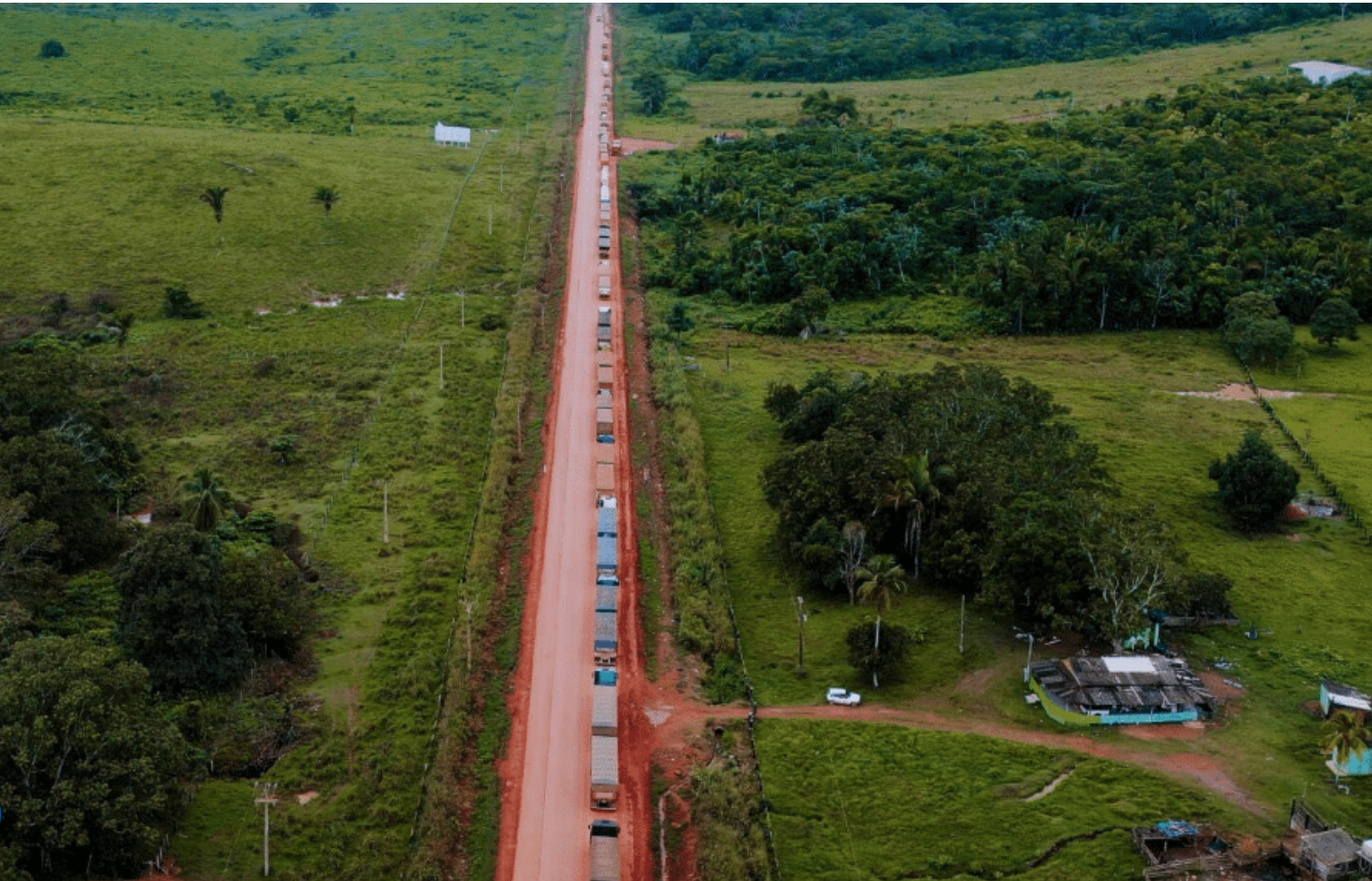
Trucks transporting soybeans on Highway BR-163 in northern Para state. Photo courtesy of So Noticias.
The Tapajos River moves about 12 million tons of grain a year, including soybeans and corn. Companies such as Cargill, Bunge, and Brazilian Amaggi operate river terminals where the grains are loaded onto barges and moved to larger facilities on the Amazon River at Santarem and Belem at the mouth of the Amazon.
Traffic congestion has been aggravated by indigenous protestors storming a Cargill transshipment center in Santarem last month in protest against the government's policy of dredging and expanding the use of the Maderia, Tapajos, and Tocantins waterways in the Amazon biome.
The demonstrations led to the government's repeal of the policy which could slow efforts to improve grain infrastructure in the Northern Arc of ports. Dredging of the Amazon region's rivers could allow the movement of larger vessels throughout the year, even in the dry season, reliving pressure on road transport, which accounts for about 60% of Brazil's grain movement.
According to calculations from the Federation of Agriculture and Livestock of Mato Grosso (Famato), the cost of transporting soybeans from the city of Sorriso in central Mato Grosso to the northern ports of Miritituba/Santarem is 23% lower than transporting the grain to Santos, Sao Paulo. If Brazil ever builds the proposed Grain Railroad from the city of Sinop in northern Mato Grosso to the Port of Miritituba, the transportation savings would be even greater.
Note: There are patches of forest and pastures on either side of Highway BR-163. In this part of Brazil, almost all the cleared areas are converted to pastures for cattle ranching. There are very few if any row crops grown in this part of Brazil.